3D sand printing: new opportunities for RKL Foundry
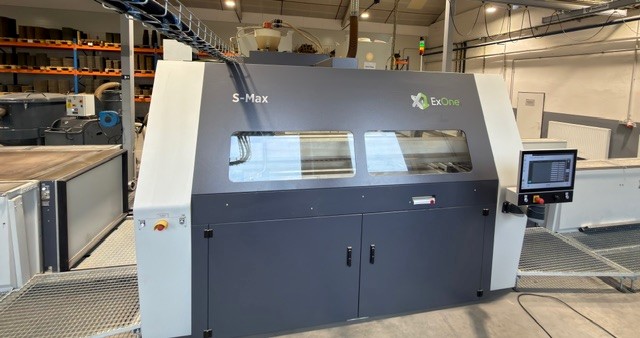
More complex castings, faster production set-up and less labour-intensive work. These are the benefits that 3D sand printing offers RKL Foundry. The technology enables the production of foundry moulds and cores directly from digital data, opening up new opportunities both in securing orders and in the production process itself.
Lower initial costs for customers
In conventional core production, core boxes – tools that give the cores their required shape – are required. 3D printing can replace them, thereby reducing the cost of pattern-making equipment. For the customer, this means a lower initial investment, whilst for the foundry it provides a competitive advantage when bidding for new contracts.
For prototypes and small production runs, both moulds and cores can be printed entirely without the need for pattern-making equipment. It is also easier to respond to changes in dimensions or current customer requirements.
Complex shapes and consistent quality
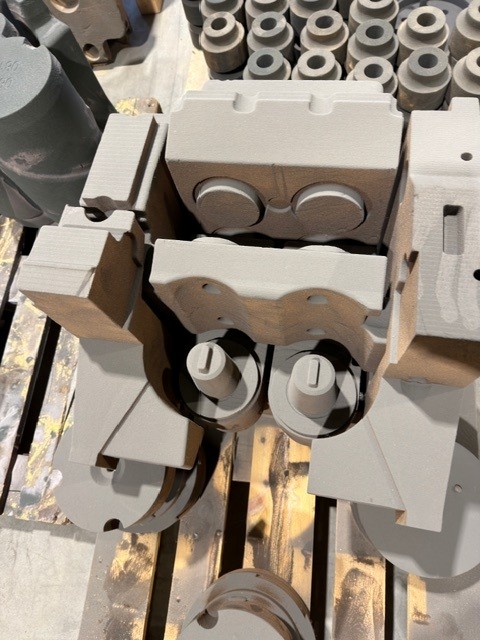
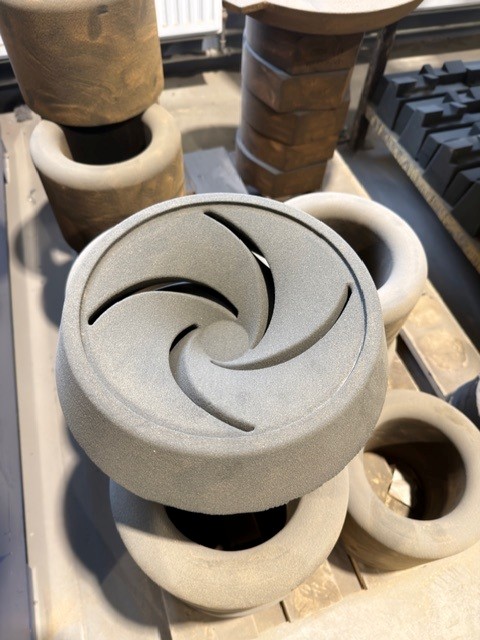
The technology enables the production of even highly complex shapes, including internal cavities in castings. It offers repeatable surface quality for moulds and cores, with dimensional accuracy of ± 0.3 mm. At the same time, it allows for the use of various types of foundry sand, including non-quartz abrasives.
Several separate cores can be combined into a single printed unit. This simplifies mould assembly and reduces the scope for errors during assembly. The result can be fewer sand and dimensional defects, as well as a lower scrap rate.
Simpler production processes
Fewer cores mean less manual labour in the core shop and manual moulding shop, as well as faster mould assembly. It also reduces the physical strain on core makers and foundry workers.
The benefits are reflected in the finishing of castings. Less grinding means less strain on grinders, lower consumption of grinding discs and less wear and tear on tools. The technology also helps to improve working conditions and, thanks to controlled binder dosing, reduces emissions.
Further opportunities for the foundry
3D sand printing also offers scope for the production of special moulds and cores for external customers. Furthermore, printing can continue at weekends and on public holidays, which expands the possibilities for utilising production capacity.
For RKL Slévárna, this therefore represents a path towards more demanding orders, more flexible production and the simplification of day-to-day work.